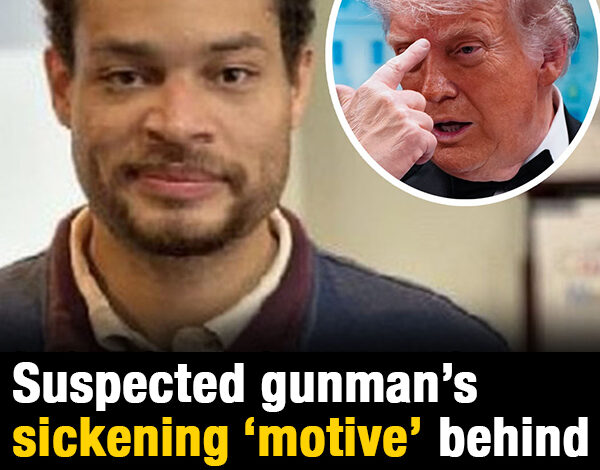
The prestigious atmosphere of the Washington Hilton was electrified with the usual hum of political elites, media moguls, and high-ranking government officials on a Saturday night that was supposed to be defined by humor and tradition. The White House Correspondents’ Dinner is widely regarded as the “nerd prom” of the nation’s capital, a rare moment where the friction of partisan politics is momentarily paused for the sake of satire and camaraderie. However, on this particular April evening in 2026, the laughter was nearly silenced by a chilling security breach that has since sent shockwaves through the American political landscape. While the world watched the red carpet, a life-and-death struggle was unfolding at the perimeter, marking one of the most significant security interventions in recent memory.
As the attendees—including Donald Trump, Melania Trump, and JD Vance—settled into the grand ballroom, the United States Secret Service and local law enforcement were busy neutralizing a threat that had bypassed several layers of standard monitoring. The suspect, identified by authorities as Cole Tomas Allen, allegedly approached a high-security checkpoint with an intent that was far from celebratory. The tension peaked when Allen attempted to breach the final barrier, leading to a violent confrontation that would ultimately leave a federal officer injured. The bravery of the security detail in that moment cannot be overstated; they stood as the literal thin line between a high-profile dinner and a national tragedy.
The details emerging from the investigation paint a terrifying picture of what might have occurred had the response been even a few seconds slower. Upon Allen’s apprehension, law enforcement reportedly recovered multiple weapons from his person and the immediate vicinity. This discovery elevated the incident from a simple trespassing case to an attempted mass-casualty event or a targeted strike. While federal authorities are still sifting through the suspect’s digital footprint and personal history to establish a definitive motive, the preliminary evidence suggests a calculated effort to disrupt the event and harm the attendees. The recovery of multiple firearms indicates a level of premeditation that has put security agencies on high alert across the country.
In the immediate aftermath of the takedown, the inner sanctum of the Hilton remained largely unaware of the chaos at the gates. This is a testament to the seamless coordination between the various protective agencies involved. The priority was not just to stop the threat, but to ensure that the panic did not spread through the densely packed venue, which could have led to a dangerous stampede or further complications. The rapid response teams acted with surgical precision, isolating the suspect and securing the area before the general public even realized something was amiss. It was a masterclass in crisis management, though it came at the cost of a wounded officer who shed blood to protect the integrity of the event.
The legal fallout for Cole Tomas Allen has been swift. Prosecutors have already moved forward with a battery of initial charges that reflect the gravity of the incident. These include various firearms-related offenses and a felony charge for the assault on a federal officer. As the FBI and other federal partners dig deeper into Allen’s background, legal experts anticipate that more severe charges—possibly related to domestic terrorism or attempted assassination—could be added to the docket. The judicial system is now tasked with uncovering how an individual with such violent intent managed to get so close to a secure zone, and what influences may have driven him to such a desperate act.
This incident has reignited a fierce national debate regarding the safety of public officials and the effectiveness of modern security protocols. In an era where political polarization is at an all-time high, the physical safety of those in the spotlight has become a paramount concern. Critics and supporters alike are looking at the White House Correspondents’ Dinner breach as a wake-up call. If a suspect can reach the checkpoint of one of the most heavily guarded events in the world while armed, it raises uncomfortable questions about the vulnerability of other public gatherings. However, the counter-argument is equally strong: the system worked. The layers of security are designed specifically to catch threats at these checkpoints, and in this instance, the “fail-safes” did exactly what they were engineered to do.
Beyond the immediate tactical analysis, there is the human element of the story. The injured federal officer, whose identity has been kept private for security reasons, represents the silent guardians who frequent these high-profile events. While the politicians and celebrities are the faces of the evening, it is the men and women in suits and tactical gear who shoulder the actual risk. Reports indicate the officer is expected to make a full recovery, but the psychological impact on the security community is lasting. The incident serves as a grim reminder that for the Secret Service, there are no “routine” assignments. Every event is a high-stakes environment where the margin for error is non-existent.
The presence of Donald Trump and his inner circle at the event added another layer of complexity to the situation. Given his status and the current political climate, the security surrounding him is among the most intensive in the world. The fact that the breach occurred while he and JD Vance were in the building has led to various theories and intense scrutiny of the perimeter’s integrity. It has also highlighted the evolving nature of threats in 2026, where lone actors can often bypass traditional intelligence gathering by operating outside of known extremist groups.
As the investigation continues, the focus has shifted toward prevention and early detection. Authorities are looking into how Allen traveled to D.C. and whether he had any accomplices or prior warnings that were missed by surveillance systems. The goal is to move from a reactive posture to a more proactive one, utilizing advanced AI-driven monitoring and better inter-agency communication to flag individuals like Allen before they ever reach a physical checkpoint. This transition is seen as essential for the future of public safety in an increasingly volatile world.
Ultimately, the story of the 2026 White House Correspondents’ Dinner security incident is one of resilience. It is a story about the quiet professionalism of those who protect the democratic process, often at great personal risk. While the headlines focus on the suspect and the potential tragedy that was averted, the real narrative lies in the success of the response. Security systems are not designed to create a world where risk is zero; they are designed to manage and mitigate that risk through speed, training, and courage. On this night in Washington, those systems were tested to their limit, and they held firm. The dinner continued, the speeches were made, and the guests eventually went home, most of them unaware of how close they had come to a very different kind of history.
