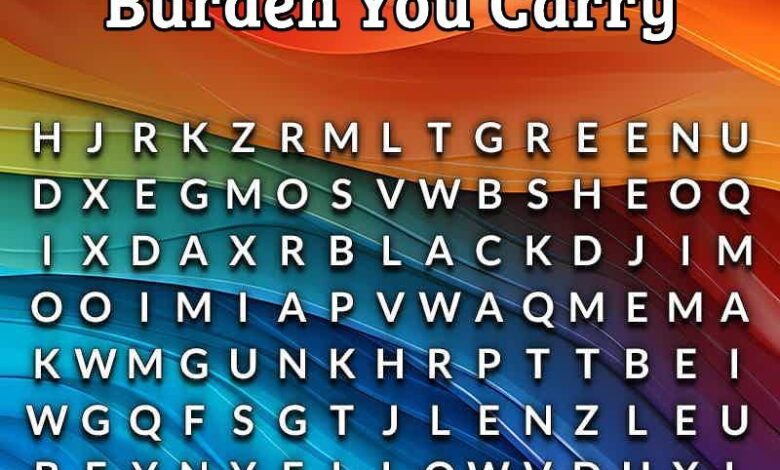
The idea is simple. When you’re shown an image packed with color, or you’re asked to quickly list the first three colors you notice in your surroundings, your brain doesn’t choose at random. Attention is selective. We’re drawn to what stands out, what feels familiar, what feels safe, or what feels urgent. In a split second, you’re not only seeing the world—you’re filtering it. That filter is where the “burden” concept comes in.
A “burden,” in this context, doesn’t have to mean trauma or tragedy. It can be stress you’ve normalized. Pressure you’re carrying quietly. Anger you’ve swallowed for years. The job of this little color game isn’t to diagnose you. It’s to mirror you. If you take it seriously enough to reflect—without turning it into a horoscope—you might recognize patterns you’ve been ignoring.
Why colors can feel so personal comes down to how the brain works. Color perception isn’t just optical; it’s interpretive. The brain links color to memory, emotion, and learned meaning. Think about how quickly a hospital-white hallway can make you feel tense, or how a warm golden light can soften your shoulders. Even if you don’t consciously notice it, your body reacts. That’s part biology and part experience.
It’s also cultural. A color that signals comfort in one place can signal grief in another. In many Western cultures, white is associated with purity, weddings, and “clean.” In parts of Asia, white is strongly linked to mourning and funerals. Red can mean danger, stop, and warning in one context, while in Chinese tradition it’s tied to luck, celebration, and prosperity. So when people say “red means passion” or “black means grief,” they’re offering a popular shorthand, not a universal truth.
Still, those shorthands exist for a reason. Over time, humans have attached emotional meaning to color because it helps us make quick sense of the world. Advertisers use it, designers use it, filmmakers use it, and so do we—every time we choose what to wear on a day we want to feel confident or invisible. Color is a language that bypasses logic and goes straight to the nervous system.
So what does this “first three colors” exercise actually do? It invites you to notice your first instinct. The moment before you talk yourself into a more “reasonable” answer. It’s a small way of catching yourself in the act of reacting. And that’s often where the truth lives.
Here are common symbolic meanings people use in these readings. Not as rules, but as prompts.
Red is intensity. It can be passion, love, ambition, and courage. It can also be anger, impatience, conflict, and a constant sense of urgency. If red shows up first for you, the “burden” might be emotional heat—feeling like everything matters right now, and if you slow down, something will break. Sometimes it points to someone who’s been trying to stay strong for too long.
Blue is depth. It can signal calm, stability, loyalty, and emotional intelligence. It can also reflect sadness, responsibility, and the weight of holding things together. If blue grabs you immediately, your burden may be quiet pressure—carrying everyone else’s mood, keeping the peace, staying composed while you need support too.
Yellow is brightness with an edge. It’s hope, creativity, playfulness, optimism. But it’s also anxiety, overthinking, and the pressure to stay positive. If yellow comes first, your burden might be the performance of happiness—feeling like you’re supposed to be upbeat even when you’re tired or hurting.
Black is protection. It can represent power, boundaries, sophistication, and self-control. It can also point to grief, fear, secrecy, or emotional armor. If black is one of the first colors you notice, you might be carrying something heavy you don’t talk about. Or you’ve become so good at guarding yourself that letting people in feels risky.
White is control and clarity. It can symbolize peace, fresh starts, and simplicity. It can also suggest perfectionism, avoidance, and a need to keep things “clean” emotionally. If white comes up quickly for you, the burden may be maintaining an image—staying composed, doing things “right,” and feeling unsafe when life gets messy.
Green is growth, healing, and survival. It can signal renewal, balance, and resilience. It can also connect to envy, comparison, and the stress of change. If green stands out, your burden might be transition—recovering from something, rebuilding, or trying to grow while your environment keeps pulling you backward.
Purple often gets tied to transformation. It can represent intuition, wisdom, creativity, and depth. It can also hint at loneliness, feeling misunderstood, or carrying questions you can’t easily answer. If purple catches you, the burden may be emotional complexity—living in your head, carrying big feelings, and not having a simple place to put them.
Orange is stimulation. It’s energy, ambition, excitement, and boldness. But it can also point to burnout, chaos, and feeling like you always need to “bring it.” If orange shows up early, the burden might be constant output—always performing, always producing, always being “on.”
Gray is in-between. It can represent maturity, neutrality, and steadiness. It can also reflect fatigue, numbness, and uncertainty. If gray appears early, your burden may be emotional fog—going through the motions, struggling to feel strongly, or feeling stuck between choices.
None of these meanings are a verdict. They’re a doorway. The value is in your reaction: does the interpretation sting a little? Does it feel familiar? Does it irritate you because it’s close to something you don’t want to admit?
If you want to use this exercise in a way that actually helps, keep it grounded. Don’t treat it like fate. Treat it like a mirror.
Pick your three colors fast—no overthinking. Then write one honest sentence for each color: what it reminds you of, what it makes you feel, and what it might represent in your life right now. If you’re into journaling, go deeper: “What am I carrying that I’m pretending is normal?” If you’re in therapy, bring it up as a conversation starter. If you’re an artist, paint it. If you’re not, you can still use it as a way to name what your body already knows.
Colors won’t solve your problems. But they can help you notice them. And sometimes, noticing is the first real step toward putting the weight down.
