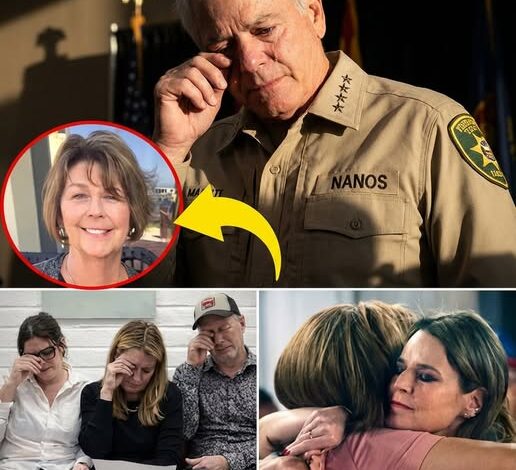
For more than a decade, Savannah Guthrie has been one of the most recognizable and steady figures in American morning television. As a central presence on the Today show, she has guided viewers through elections, natural disasters, global crises, and deeply personal human-interest stories with composure and clarity. Millions have come to associate her voice with reassurance during uncertain times. But in early 2026, the familiar balance between journalist and story shifted in a way few could have imagined. Savannah is no longer just reporting the news. She is living it.
Her 84-year-old mother, Nancy Guthrie, disappeared in Arizona under circumstances that remain unclear. What began as a local search effort quickly expanded into a complex, multi-agency investigation that has drawn national attention. The professional distance Savannah has long maintained as an anchor has dissolved, replaced by the raw, unscripted experience of being a daughter facing the agonizing unknown.
The shift from covering breaking news to becoming part of it is profound. For years, Savannah has asked the questions. Now, she is waiting for answers. The roles have reversed in the most painful way possible.
In Arizona, search efforts continue across a landscape defined by vast stretches of desert, rugged terrain, and extreme weather conditions. Law enforcement officials have described the investigation as active and ongoing, using measured language about forensic analysis, digital evidence, and the verification of leads. Those phrases carry procedural meaning, but for a family waiting for news, they also underscore the absence of certainty.
From the outside, Savannah has maintained her professional composure. She continues to appear on air, fulfilling her responsibilities with the same discipline and poise that have defined her career. Viewers see her seated at the anchor desk, engaged and steady. What they do not see are the long hours away from the cameras — the private calls with investigators, the careful parsing of updates, the emotional toll of waiting for a breakthrough that may or may not come.
This dual existence — public anchor, private daughter — is a burden few could carry without strain. On one side is the obligation to remain clear-eyed and focused for an audience that relies on her. On the other is the deeply personal fear that accompanies every new development in the case.
Despite the intense public scrutiny that naturally follows someone of her profile, Savannah has handled the situation with restraint. She has avoided spectacle. In the limited public remarks she has made, the focus has not been on her status or visibility but on her mother as a person. Nancy Guthrie is not a headline to her. She is a parent, a grandmother, a woman with a history and a life that cannot be reduced to a missing-person bulletin.
Meanwhile, the search itself continues. Investigators have reviewed surveillance footage, analyzed digital communication records, and followed up on tips from the public. Each lead offers the possibility of progress but also the risk of disappointment. In cases like this, the passage of time becomes its own form of pressure. Days feel longer. Silence grows heavier.
In communities near where Nancy was last seen, volunteers have joined organized search efforts, walking desert trails and scanning open terrain. Their participation reflects not only concern for Nancy but also a recognition of Savannah’s years spent informing and comforting viewers across the country. A quiet reciprocity has emerged. The public figure who has delivered news through countless national moments is now the recipient of widespread empathy.
Colleagues have stepped in to support her when needed, ensuring that the demands of live television do not overwhelm someone navigating personal crisis. Behind the scenes, newsroom solidarity has been evident. The professional environment that once revolved around deadlines and breaking alerts now also carries an undercurrent of shared concern.
Savannah’s faith, which she has openly spoken about in the past, has also become part of this chapter. Those close to her describe it as a source of grounding during a period defined by instability. Faith, in this context, is not about certainty of outcome but about endurance — the capacity to hold hope even when clarity is absent.
Hope, however, exists alongside realism. Investigators are methodical, not dramatic. Every development is scrutinized. Every piece of information is tested before being treated as fact. For the Guthrie family, that means living in a state of suspended resolution. It means understanding that progress in an investigation is often incremental rather than sudden.
The public sees Savannah in the anchor chair, composed and articulate. What they may not fully grasp is the emotional discipline required to separate personal anguish from professional responsibility. Live television allows little room for visible fracture. Yet beneath that composure is a daughter measuring time not by broadcast segments but by the hours since the last update.
The story of Nancy Guthrie’s disappearance is still unfolding. Its conclusion remains unknown. But already it has revealed something about the human side of those who deliver the news each day. Anchors are often perceived as steady figures behind a desk, narrating events at a measured distance. This moment reminds viewers that they, too, are vulnerable to life’s abrupt and painful turns.
As search teams continue their work under the Arizona sky, the emotional vigil continues as well. It exists in the newsroom, in the desert, and in the quiet spaces where family members hold onto hope. It exists in the tension between routine and disruption — between a broadcast that must go on and a personal story that refuses to be resolved.
Savannah Guthrie has spent years helping the nation process uncertainty. Now she stands within it. Her resilience is visible not because she is untouched by fear, but because she refuses to let it define her. Behind the headlines and the studio lights is a daughter waiting for news about her mother. And in that waiting, she reflects something universal: the enduring strength of love when confronted by the unknown.
