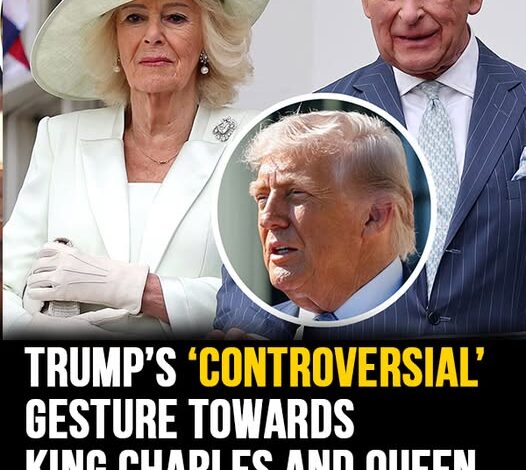
Donald Trump and Melania Trump have recently spent considerable time alongside King Charles III and Queen Camilla. On the surface, their interactions appeared friendly, marked by smiles and diplomatic pleasantries. Yet, despite the cordial atmosphere that the White House sought to project, one specific and highly visible detail has drawn strong reactions from observers and royal enthusiasts alike. This controversial element revolves around the physical gestures Trump directed toward the British royals, actions that many viewers and etiquette experts have interpreted as deeply inappropriate or even disrespectful.
The Geopolitical Backdrop
The backdrop to this visit adds another layer of complexity to the situation, particularly given the current state of global affairs. Relations between the United States and the United Kingdom have shown visible signs of strain in recent months, largely in connection with the escalating Iran conflict and differing approaches to foreign policy. Trump’s public rhetoric toward Britain has at times been notably sharp and confrontational. He previously referred to British Prime Minister Keir Starmer as a loser for declining to support certain United States military efforts, controversially adding that Starmer was no Churchill. When asked more recently by the press about the current state of relations, Trump remarked bluntly that things were not good, not good at all.
Against that tense backdrop, the state visit by King Charles and Queen Camilla carries immense diplomatic weight. Such high-level visits are meticulously designed not only to reinforce long-standing alliances but also to ease tensions through symbolic gestures, thoughtful public messaging, and shared cultural moments. During his address to the United States Congress, King Charles leaned heavily into that role, emphasizing the profound depth of the historical relationship between the two nations and the shared values that bind them together.
A Message Of Unity
During his address, the King noted:
Standing here today, it is hard not to feel the weight of history on my shoulder – because the modern relationship between our two Nations and our own peoples spans not merely 250 years, but over four centuries. It is extraordinary to think that I am the nineteenth in our line of Sovereigns to study, with daily attention, the affairs of America.
He continued to build bridges of friendship:
So, I come here today with the highest respect for the United States Congress; this citadel of democracy created to represent the voice of all American people to advance sacred rights and freedoms. Speaking in this renowned chamber of debate and deliberation, I cannot help but think of my late mother, Queen Elizabeth, who, in 1991, was also afforded this signal honor and similarly spoke under the watchful eye of the Statue of Freedom above us. Today, I am here on this great occasion in the life of our Nations to express the highest regard and friendship of the British people to the people of the United States.
The Protocol Debate
Although Trump has often expressed admiration for the Royal Family, critics argue that his approach during this specific visit did not fully align with the traditional expectations of royal etiquette and decorum. While it is widely known that bowing or curtsying is not strictly required when meeting British royals, there is a very different, long-standing convention regarding physical contact. The established rule dictates that physical contact should be extremely limited and typically initiated only by the royal family member themselves, not by the guest or dignitary.
Photographs from the visit tell a fascinating story. They appear to show Trump patting King Charles on the back as they entered the White House. Inside the Oval Office, another image shows him touching the King’s knee while engaged in conversation. Furthermore, another widely shared photograph depicts Trump placing a friendly hand on Queen Camilla’s arm. These moments quickly circulated across various social media platforms, sparking a fierce online debate regarding boundaries, respect, and diplomatic protocol.
Divided Public Reactions
The reaction from the public was sharply divided, reflecting broader cultural and political divides across the nation.
- Critics argued that the physical contact was completely uncalled for. One critical observer wrote that they did not think anyone is supposed to touch a King or Queen, but of course, Donald Trump loves breaking protocol.
- Another added that they noticed the same behavior and felt it was inappropriate for him to touch Camilla as well.
- A third commenter argued that etiquette does not matter to Donald Trump, stating that he has never heard of the word, nor has he heard of respect for established traditions.
At the same time, there were many voices defending the tone and warmth of the visit. Supporters praised what they saw as a genuinely warm and welcoming atmosphere between the leaders. One supporter expressed gratitude for such a warm welcome to Their Majesties, while another stated how proud they were of the graciousness and goodwill displayed by both the President and Mrs. Trump. Another defender emphasized the historical significance of the meeting, stating that when leaders meet with mutual respect at the White House, it is more than just ceremony—it is a reminder of the long-standing alliance and shared history between the two nations.
Rethinking Modern Diplomacy
While royal protocol is often viewed as a rigid and unchanging set of rules, it remains largely symbolic rather than legally binding. The expectation that one should not initiate physical contact with a monarch is deeply rooted in tradition, reflecting centuries of formality, deference, and social hierarchy. Still, in the context of modern diplomacy, such conventions are sometimes interpreted more flexibly, particularly when differing cultural backgrounds and personalities come into play.
In the end, the reactions reveal as much about public expectations regarding leadership as they do about the interactions themselves. For some people, strict adherence to tradition is the ultimate signal of respect and diplomatic tact. For others, a more relaxed and informal approach reflects authenticity, approachability, and genuine warmth. The stark contrast between these two perspectives continues to shape how high-profile moments like this are perceived by the public, ensuring that royal etiquette remains a highly debated topic in international relations.
