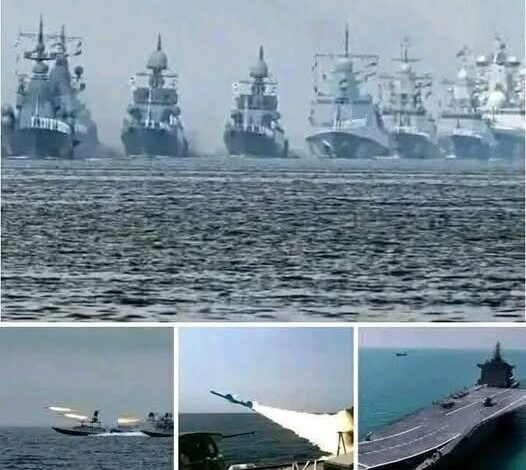
The modern geopolitical landscape is no longer defined by the thunderous roar of traditional battlefield maneuvers or the clear-cut lines of declared hostilities that characterized the twentieth century. Instead, we have entered an era of “simmering stability,” a state of perpetual tension where the United States and its global adversaries navigate a minefield of high-stakes conflicts without ever quite tipping over into the abyss of a formally recognized world war. To the casual observer scrolling through a social media feed, the headlines suggest a world on the brink of total collapse. However, beneath the layer of alarming rhetoric and digital sensationalism, a far more complex and calculated game of diplomatic chess is being played in the shadows.
In the current theater of Eastern Europe, the crisis in Ukraine serves as the primary focal point for this new brand of restricted engagement. While the imagery of hardware and troop movements dominates the news cycle, Washington’s strategy has remained rooted in a philosophy of indirect influence rather than direct intervention. By channeling its power through a sophisticated web of multi-layered sanctions, advanced logistical support, and constant back-channel communications, the United States has managed to exert significant pressure on the Kremlin while strictly avoiding the “red line” of direct kinetic engagement. This approach represents a fundamental shift in how superpowers interact; the goal is no longer necessarily the total subjugation of the enemy on the field, but rather the systematic degradation of their capabilities through economic and technological isolation.
Interestingly, even as the public discourse grows more polarized and aggressive, the actual diplomatic machinery remains remarkably active behind closed doors. We see this most clearly in the trilateral discussions hosted by the United Arab Emirates involving representatives from Russia, Ukraine, and the United States. Furthermore, indirect negotiations with Iran taking place in Oman highlight a startling reality: even the most bitter of rivals are still choosing the conference table over the trenches. These secret corridors of power serve as the ultimate safety valve for global security. They allow for the exchange of intentions and the setting of boundaries that prevent accidental escalation. It is a world where the public “political theater” often contradicts the private “pragmatic dialogue,” creating a confusing duality for the average citizen trying to make sense of the chaos.
We must acknowledge that modern conflict rarely begins with a dramatic, televised declaration of war. In the twenty-first century, aggression is a “creeping” phenomenon. It advances through the dark corners of the internet via sophisticated cyber operations designed to cripple infrastructure and sow domestic discord. It manifests in proxy battles where smaller nations or non-state actors fight on behalf of larger interests, keeping the hands of the major powers seemingly clean. It moves forward through limited, surgical strikes that test the resolve of the opposition without triggering a full-scale retaliatory response. This ambiguity is the primary weapon of the modern age. When the lines between peace and war are blurred, it becomes incredibly easy for online agitators, rogue influencers, and misinformation campaigns to twist nuanced geopolitical complexity into a narrative of impending catastrophe.
The danger of this era is not just the physical threat of weapons, but the psychological toll of uncertainty. When every minor escalation is framed as the beginning of the end, the public falls into a state of “paralyzed fear.” This fear is often manufactured by those who profit from engagement metrics and viral hysteria. Understanding the technical distinction between a tactical escalation and an outright declaration of war is not just a pedantic exercise for academics; it is an essential tool for survival in the information age. It is the filter that allows an individual to distinguish between a calculated move on the global stage and a genuine existential threat.
Clarity, in this context, becomes a tangible form of national and personal security. To be informed is to be shielded against the emotional manipulation that defines so much of today’s media environment. While the United States continues to balance its global interests against the risk of overextension, the primary battleground has shifted from the physical territory of distant lands to the cognitive territory of the human mind. The “Global Security Update” is not just about where the tanks are moving, but about how we perceive the movement itself.
In the Middle East and beyond, the pattern remains consistent. The reliance on regional intermediaries like the UAE and Oman suggests that the world is moving toward a multipolar diplomatic model. No single nation can dictate the terms of peace, just as no single nation can afford the cost of a total war in a hyper-connected global economy. The financial systems of the world are so deeply intertwined that a true “total war” between major powers would result in mutual economic destruction long before the first missiles were even launched. This economic interdependency acts as a powerful, albeit invisible, deterrent that keeps the “simmering” conflicts from boiling over.
As we look toward the remainder of 2026 and beyond, the challenge for the United States will be maintaining this delicate equilibrium. The pressure to “do more” or to “withdraw entirely” comes from all sides of the political spectrum, yet the middle path—the path of informed vigilance—is the only one that preserves the current global order. The strategy of using “rooms and tables” instead of “trenches and tanks” is not a sign of weakness; it is a sign of a maturing global consciousness that recognizes the futility of traditional conquest in a digital world.
In conclusion, the alarming headlines we see today are often the surface-level ripples of a much deeper, much more controlled movement of power. By looking past the theater and focusing on the structural realities of modern diplomacy, we can find a sense of grounded perspective. The world is not ending; it is redefining what it means to be at odds. Informed vigilance is our best defense against the “creeping” nature of modern conflict. In a world where information is weaponized, the ability to see through the fog of digital war is the ultimate security measure. We must remain watchful, certainly, but we must also remain calm, recognizing that the silence of the back-channel is often more powerful than the noise of the news cycle. Truth is the only thing that can stand between a society and the paralyzing fear of the unknown. As we navigate these turbulent times, let us prioritize clarity over sensation and strategy over theater. This is the redefined narrative of our time, and understanding it is the first step toward a more secure future for everyone.
